
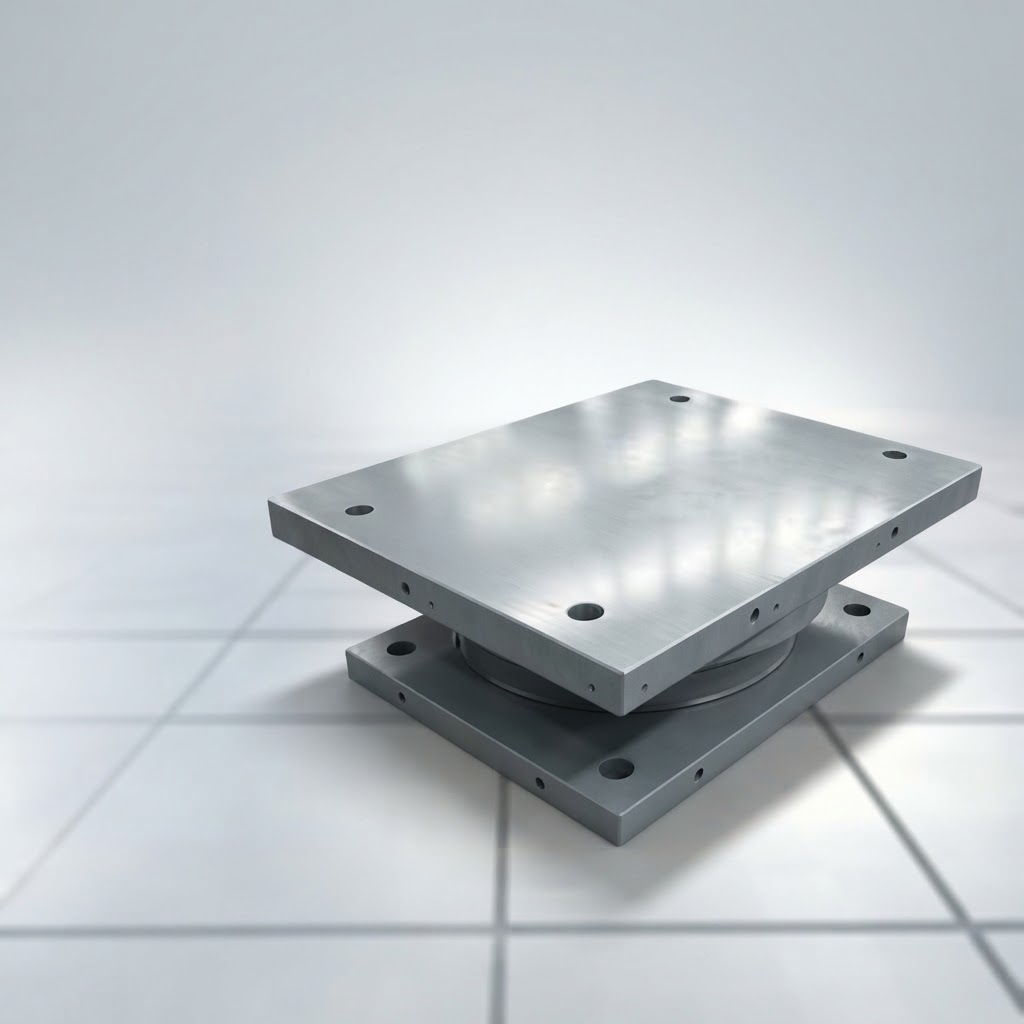
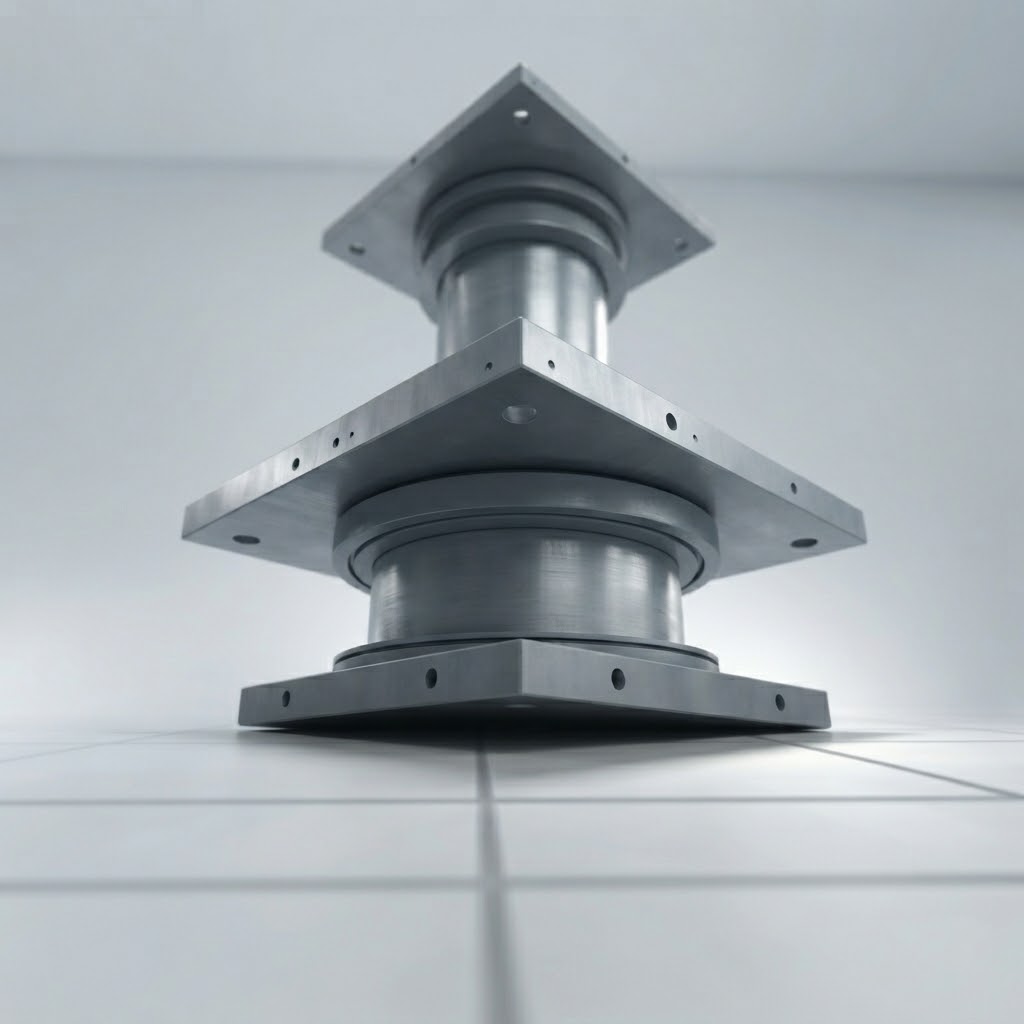
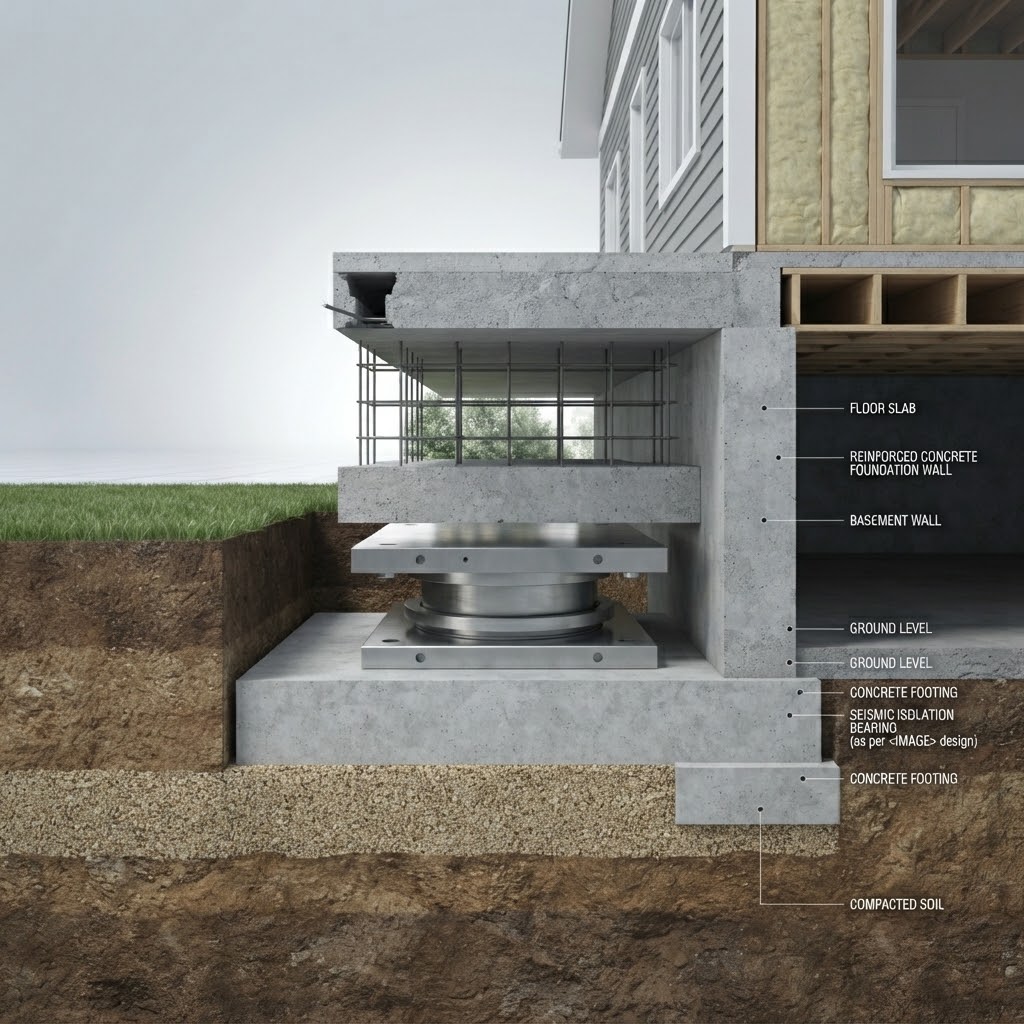
For the construction of homes and residential buildings, the most recommended type of seismic isolator or support does not strictly belong to the heavy-duty pot-bearing series (such as the GPZ or QPZ, which are designed primarily for bridges and large-scale road infrastructure projects), but rather to elastomeric or lead-rubber-core (LRB) systems and high-damping (HDR) systems.
However, adapting this to the context of residential buildings, here’s a breakdown of what’s used and why:
Elastomeric Lead-Core Isolators (LRB): These are the most recommended and widely used worldwide for medium- and high-rise residential buildings in seismic zones. They combine the flexibility of rubber (which isolates ground motion) with a lead core that undergoes plastic deformation to dissipate seismic energy, drastically reducing accelerations within the structure and protecting the finishes and interior walls of the apartments.
High-Damping Isolators (HDR): These are an excellent alternative when a system that does not rely on lead is desired. They use specially formulated rubber compounds to provide greater internal damping on their own, making them very clean, aesthetically pleasing, and efficient for residential buildings.
Why aren’t the GPZ/QPZ/JPZ/KPZ series commonly used here?
Series such as GPZ or QPZ are pot bearings designed to support monumental point loads and unidirectional movements in bridges,
When selecting a seismic isolator or support, these designations indicate the design family, capacity, and kinematic behavior:
1. GPZ (General/Standard Series)
Meaning: This is the base series of pot bearings most commonly used in highway bridges, viaducts, and medium- to large-scale structures.
Use: It is subdivided according to mobility into fixed (GD), unidirectional sliding (DX), or bidirectional sliding (SX) types to accommodate normal thermal expansion. Within this same family, there are variants with moderate seismic resistance, such as the GPZ(KZ).
2. QPZ (Series for Long Spans / Special Bridges)
Description: This series of bearings is specifically designed for bridges with extra-long spans, cable-stayed bridges, or marine crossings that handle massive loads and require much higher displacement capacities.
Use: They support extreme loads (often ranging from 5,000 kN to over 60,000 kN) and are optimized to tolerate large longitudinal and transverse displacements under severe loads.
3. JPZ / KPZ (Series Focused on Seismic Isolation and Dissipation)
Meaning: These are specially designed variants aimed at energy control and the absorption of seismic impacts in areas of high seismic activity.

Reviews
There are no reviews yet.